Peach Melba Entremet
Entremet Pêche Melba
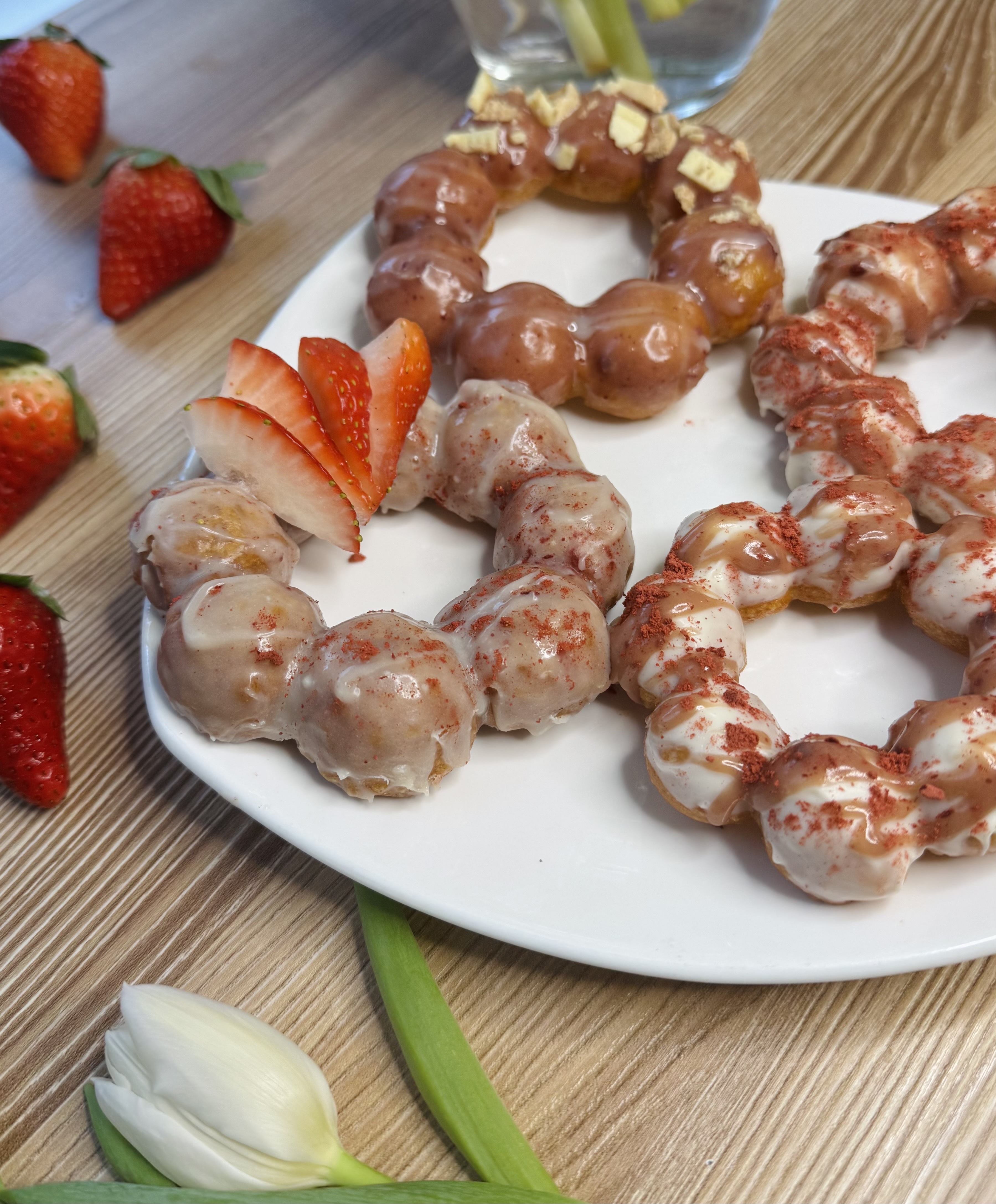
Blushing peach mousse cakes with a hidden raspberry heart, sitting on a tender almond joconde biscuit and coated in a glossy tinted white chocolate shell. A modern take on the classic Peach Melba.
 Adept
Adept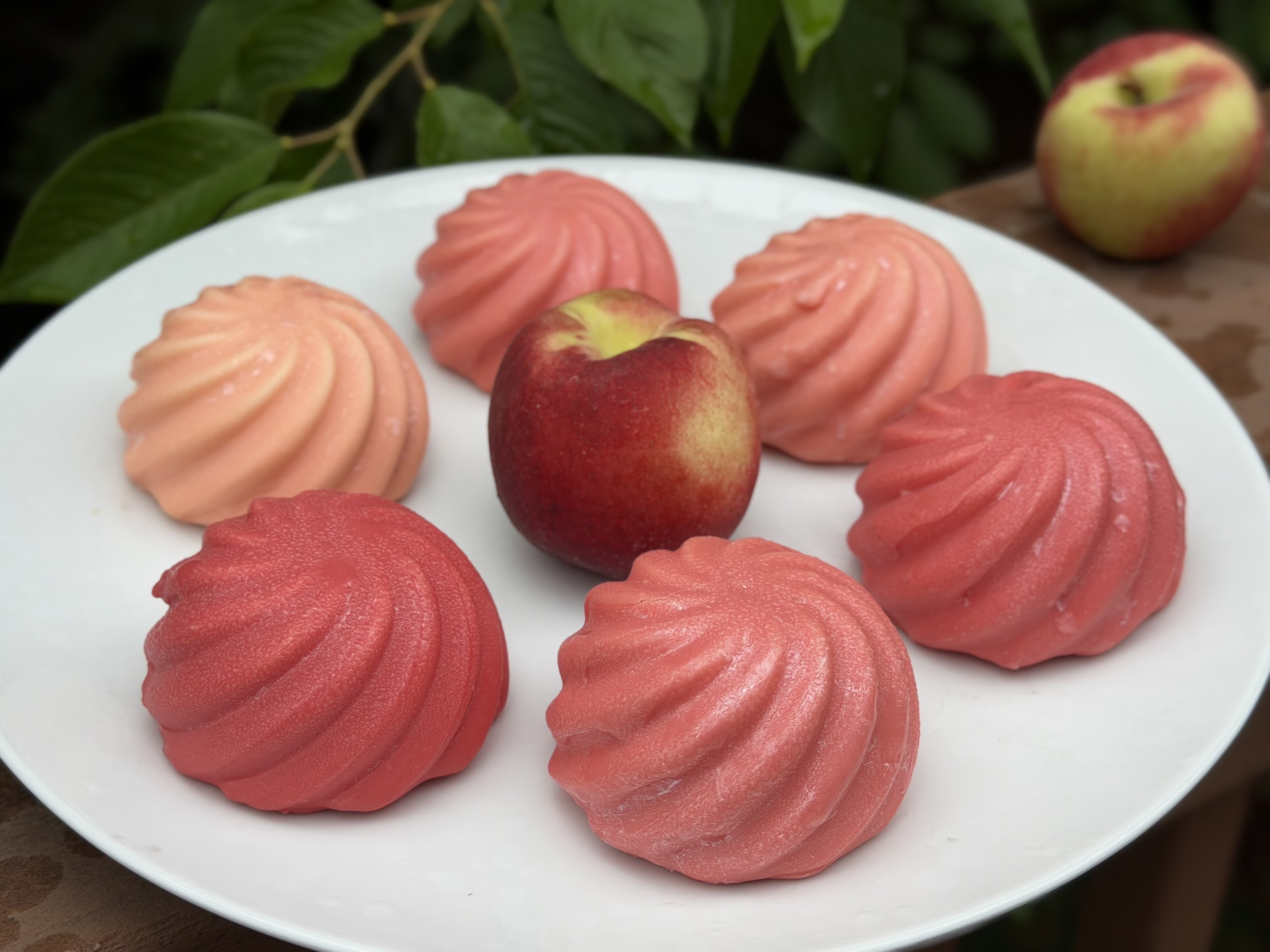
With corps desserts having such a moment right now, and inspired by the classic Peach Melba, I put together the perfect recipe for you: blushing mousse cakes with a hidden raspberry heart, sitting on a tender almond joconde biscuit. These sweet little orbs are coated in tinted white chocolate, just to make your eyes sparkle even more.
Plan Ahead
The active cooking time is about an hour, but the full recipe needs two days total, with freezing breaks in between. Read through all the stages before you start so the timing does not catch you off guard.
A French classic in a modern interpretation, exactly what this mousse cake will give you.Follow the tips and inspirations below.
Make It Yours
Swap the Fruit:
This same structure works beautifully with mango and passionfruit, or apricot and rosemary, keeping the mousse and confit technique exactly the same.
Choose Your Mold:
The mold you choose changes the whole look of the final dessert. A hemisphere or any shape you like will all work, so use whatever your kitchen already has.
Add a Sprinkle:
Right after dipping, while the shell is still just barely set, scatter on chopped nuts or shredded coconut, or really whatever your baking heart desires.
Good To Know
Keep Everything Cold:
Gelatin needs a cool environment to set properly. Warm ingredients or a warm kitchen will slow this down and can cause the mousse to separate.
Freeze Before Coating:
The entremet must be completely solid before dipping. This is what gives the chocolate shell its clean, even finish.
Work Fast With the Chocolate:
The melted coating should be warm, not hot, around 35 to 40°C. Dipping into chocolate that is too hot will melt the frozen mousse before the shell can set.
Instructions
Four stages spread across two to three days. Make the raspberry confit and joconde biscuit first, then the peach mousse and assembly, and finally the coating. The active work is only about an hour, but the freezing breaks in between are what give you those clean, glossy shells, so read through everything before you start.
Stage 1: Raspberry Confit (Day 1)
- Sprinkle the powdered gelatin over the cold water and let it sit for 5 to 10 minutes to bloom. It will turn thick and gel-like.
- Combine the raspberries and sugar in a small saucepan. Cook over medium heat, mashing gently, for about 5 minutes until juicy and slightly reduced.
- Strain the mixture through a fine sieve to remove the raspberry seeds, keeping all that bright raspberry flavor without the crunch.
- Return the strained puree to low heat, stir in the bloomed gelatin until fully dissolved, then stir in the lemon juice.
- Pour into small molds of your choice, about 3 to 3.5cm across (a mini hemisphere or sphere mold works well), filling each about two thirds full.
- Freeze for at least 4 hours, ideally overnight.
Stage 2: Joconde Biscuit (Day 1 evening or Day 2 morning)
- Preheat the oven to 180°C (350°F) and line a baking sheet with parchment.
- Whisk the eggs, almond flour, and powdered sugar together until pale and slightly thickened, about 3 minutes.
- Fold in the melted butter and almond extract, then sift in the flour and fold gently until just combined.
- In a separate bowl, whip the egg whites to soft peaks, then gradually add the sugar and whip to glossy, stiff peaks.
- Fold the whipped whites into the almond batter in two additions: add about half, fold gently just until no streaks remain, then add the rest and fold again with the same light hand.
- Spread the batter thinly, about 5mm, onto the prepared sheet. Bake for 8 to 10 minutes, until lightly golden and springy to the touch.
- Let cool completely, then cut out circles slightly smaller than your mold. Refrigerate until needed, not the freezer.
- How to tell the batter is right: it should look light, airy, and slightly glossy. Lift the spatula out, and if the batter falls back into the bowl in soft ribbons rather than sinking like a liquid, you have kept the air in and folded correctly.
- How to tell it is baked right: a perfect joconde should be tender enough to bend slightly without cracking. That flexibility, not dryness, is what tells you it is done.
Stage 3: Peach Mousse and Assembly (Day 2)
- Sprinkle the powdered gelatin over the cold water and let it sit for 5 to 10 minutes to bloom.
- If you are using whole peaches, blend them until completely smooth first. If you are using a store-bought peach puree, simply measure out what you need and use it as is.
- Warm about a quarter of the peach puree in a small saucepan. Stir in the bloomed gelatin until dissolved, then combine with the remaining puree, powdered sugar, and lemon juice.
- In a separate bowl, whip the cold heavy cream to soft peaks, then gently fold in the Greek yogurt.
- Once the peach mixture has cooled to room temperature, fold it into the cream and yogurt in two additions, until smooth and even.
- Pipe or spoon the mousse into your molds of choice, filling each about halfway.
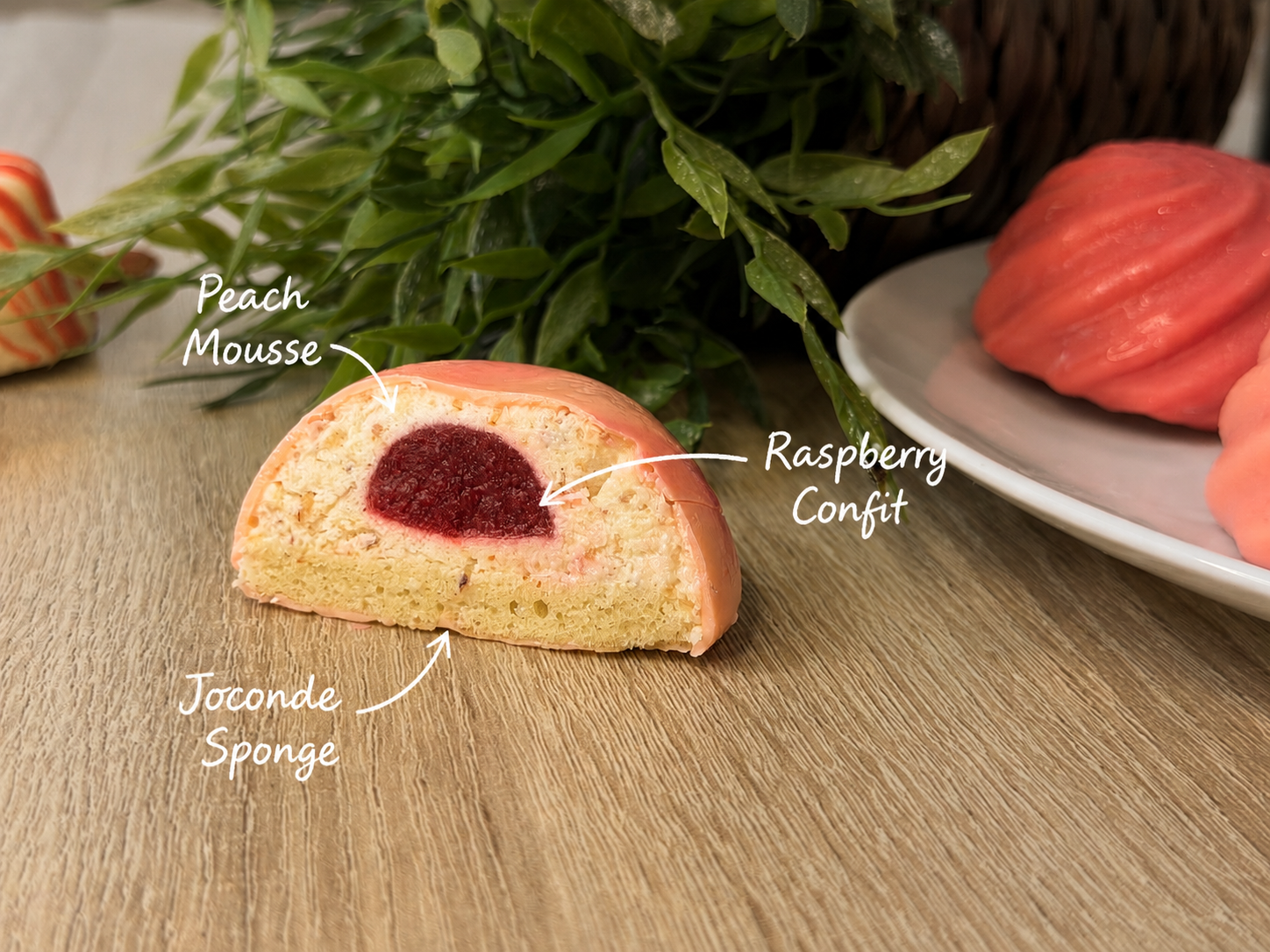
- Unmold the frozen raspberry inserts and press one into the center of each mousse filled cavity.
- Top with a little more mousse, then finish with a joconde disc, pressing gently so it sits flush with the rim of the mold.
- Freeze for at least 8 hours, ideally overnight, until completely solid.
Stage 4: Coating and Decorating (Day 3, or Day 2 evening if timing allows)
- Unmold the entremets while still frozen. They should feel solid, like a rock. Return them to the freezer briefly if they start to soften.
- Melt the white chocolate wafers gently over a double boiler (bain-marie), stirring until smooth. At the same time, warm the coconut oil in the microwave in short bursts until melted.
- Stir the melted coconut oil into the white chocolate while it is still over the bain-marie. This thins the coating so it goes on beautifully thin when you dip, and makes it much easier to work with at home.
- Pour the coating into a tall, narrow container, a tall glass or tumbler works well, rather than a wide bowl. This uses less chocolate overall and creates less waste, since each piece can be fully submerged with only a small amount.
- Tint the coating gradually: start with a little yellow and orange combined for the base peach tone, then add pink a touch at a time until you are happy with the shade. Do not be afraid to experiment, the color is what sells the illusion.
- Dip each frozen entremet into the tinted chocolate to coat completely, letting the excess drip off.
- If a dessert starts to soften while you are dipping, pop it back into the freezer for a few minutes to firm up again before continuing with the rest.
- Place on parchment and transfer to the refrigerator for 3 to 4 hours to thaw slowly and evenly.
- Slice into the finished entremet to reveal the raspberry heart at the center, a small tribute to the dessert that inspired it. Best enjoyed the same day it thaws, while the shell is still crisp and the mousse is at its softest.
Ingredients
For the Raspberry Confit
The insert
- 200g frozen raspberries
- 40g granulated sugar
- 3g powdered gelatin, bloomed in 15g cold water
- 1 tsp lemon juice
For the Joconde Biscuit
- 2 large eggs
- 65g almond flour
- 65g powdered sugar
- 20g all-purpose flour
- 15g unsalted butter, melted
- 2 large egg whites
- 10g granulated sugar
- 1/4 tsp almond extract (optional)
For the Peach Mousse
- 250g white peaches (or frozen peach chunks or store-bought peach puree)
- 100g heavy cream (33 to 35%), cold
- 100g whole milk Greek yogurt
- 50g powdered sugar
- 6g powdered gelatin, bloomed in 30g cold water
- 1 tsp lemon juice
For the Coating
The shell
- 200g white melting wafers (or good-quality white chocolate)
- 2 to 3 tbsp coconut oil, melted
- Oil-soluble food coloring: yellow, orange, and pink
Nutritional Value
Per 1 entremet (based on a yield of 6):
Calories: ~290 kcal
Total Fat: 16g
Carbohydrates: 32g
Protein: 5g
Note: Nutritional values are approximate and may vary based on specific ingredients and portion sizes.